
by Zcyrel Barola
Three months after Typhoon Uwan hit Catanduanes, traces of its impact still linger across communities. While damaged homes have begun to be repaired and daily routines slowly restored, recovery has taken different forms for the children in the province. Many continue to carry vivid memories of strong winds, rising waters, and sudden disruption.
Recognizing that children’s recovery requires more than material support, Psychological First Aid (PFA) sessions were rolled out through a partnership between Educo Philippines and UNICEF Philippines to help address their psychosocial needs. PFA is a humane and supportive approach recommended by the World Health Organization (WHO), to assist individuals facing distress after emergencies such as typhoons.
“Children have the right to safety, protection from distress, and access to support during emergencies, ensuring they feel safe. UNICEF prioritizes children’s mental health during disasters by providing mental health and psychosocial support (MHPSS), creating safe spaces, and training service providers and caregivers,” Maricris Cabural, UNICEF Philippines Child Protection Specialist, says.
Among the trained responders is Lalen Cabrera, 48, a Child Development Worker (CDW) and Early Child Care and Development (ECCD) Focal Person.
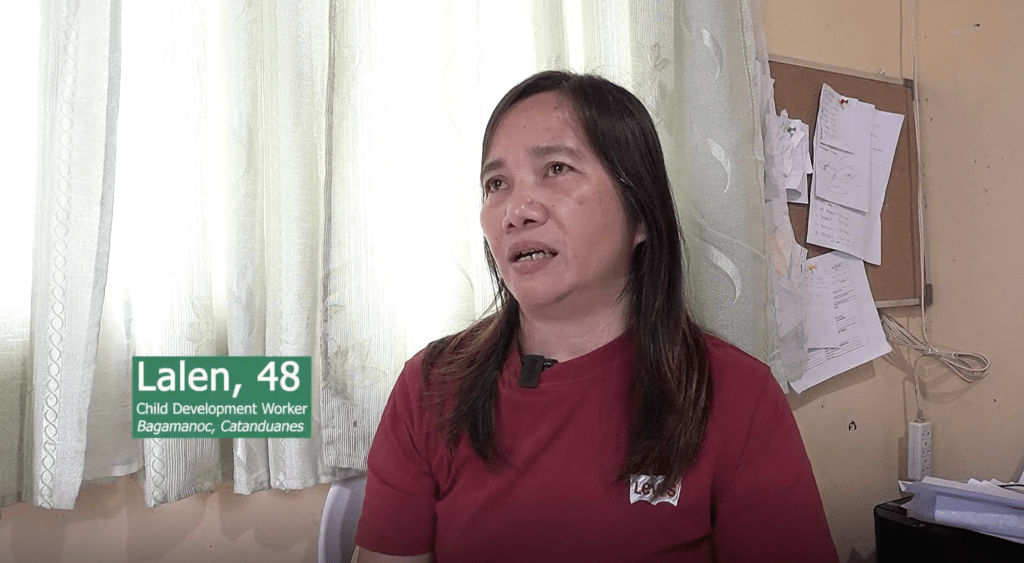
The rollout of PFA sessions marked a new experience for Lalen and her colleagues. It was their first time facilitating structured psychosocial support sessions.
“Medyo kabado kami kasi hindi namin masyadong alam kung kaya ba namin kaharapin talaga ‘to… kung magiging acceptable ba kami sa [mga bata],” Cabrera said.
(We felt a bit nervous because we weren’t sure if we were truly ready to face this… or if the children would accept us.)
The uncertainty stemmed not only from conducting something new but also from the responsibility of creating a safe and supportive environment for children during a vulnerable time. The training was designed to help them build spaces where children felt more comfortable expressing themselves.
Cabrera recalls that one of the areas they visited involved steep and slippery roads, especially during rainy weather. Despite this, she remained focused on her purpose.
“Medyo mahirap yung daan… medyo maulan, tapos madulas yung kalsada. Matarik ‘yung mga dinadaanan, tapos medyo bangin ‘yung gilid niya. Nakakatakot talaga. Pero ‘yung inisip ko, ‘yung pagdating ko doon, merong mga bata na umaasa na dadating kami, na mapapasaya namin sila,” she added.
(The journey was quite difficult. It was raining, and the road was slippery. The paths were steep, with cliffs along the side. It was really frightening. But what kept me going was the thought that when we arrived, there would be children waiting for us, hoping we would come and bring them happiness.)
In her many years of experience as a CDW, Lalen stated that children in distress become more withdrawn and less participative during activities. These are signs of the emotional weight many children were carrying. While some reacted strongly when recalling their experiences during the storm, others remained quiet, unable to fully articulate their feelings. It was in this very context that the PFA sessions were rolled out.
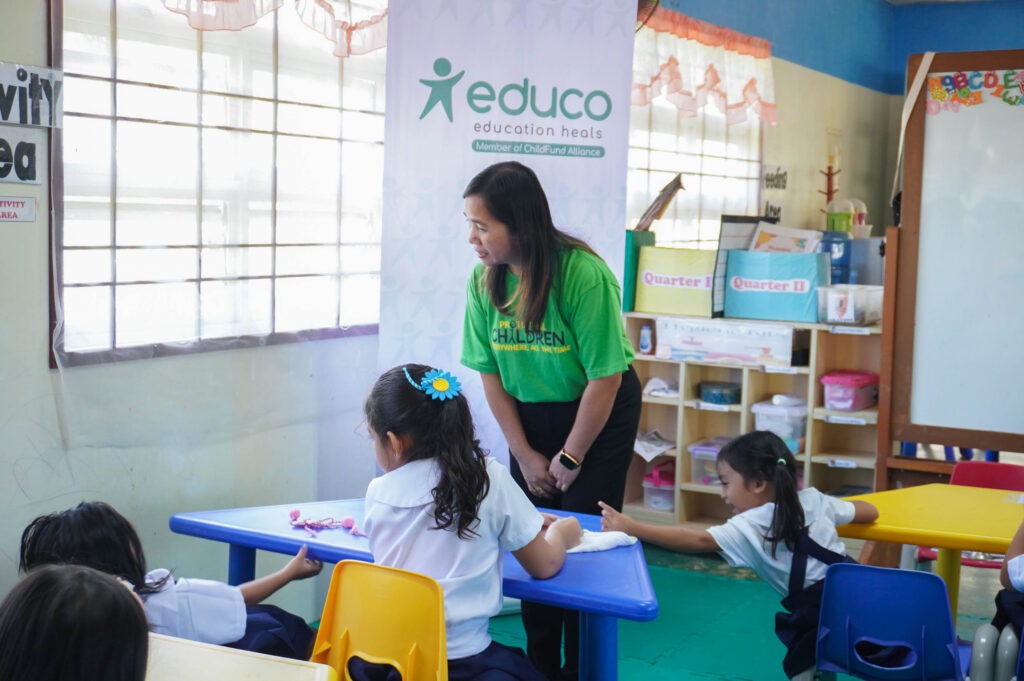
During the PFA sessions, children participated in structured yet engaging activities. They danced, played games, and practiced breathing exercises designed to help them regulate their emotions. These activities created opportunities for children to release tension and communicate what they had experienced. She recounts that while some children initially reacted strongly when speaking about the typhoon, describing floodwaters entering their homes or witnessing damage, their responses shifted after participating in the sessions.
“Meron talaga[ng] mga bata na nag-react. Nag-react sila kasi nakita talaga nila kung paano dumating ‘yung bagyo sa kanila, ‘yung baha, kung paano nasira yung bahay nila. Pero [dahil] sa PFA, medyo gumaan po ‘yung pakiramdam nila. Tsaka naging masaya na din po sila after nung activity po na ginawa namin sa kanila,” she added.
(There were really children who showed strong emotional reactions. They reacted because they saw how the typhoon hit them, the flooding and how their homes were destroyed. But through PFA, their feelings gradually became lighter. After the activities we conducted, they began to feel happier.)
The distribution of children’s kits further contributed to this sense of normalcy and encouragement. When the children received the materials, their excitement was immediate.
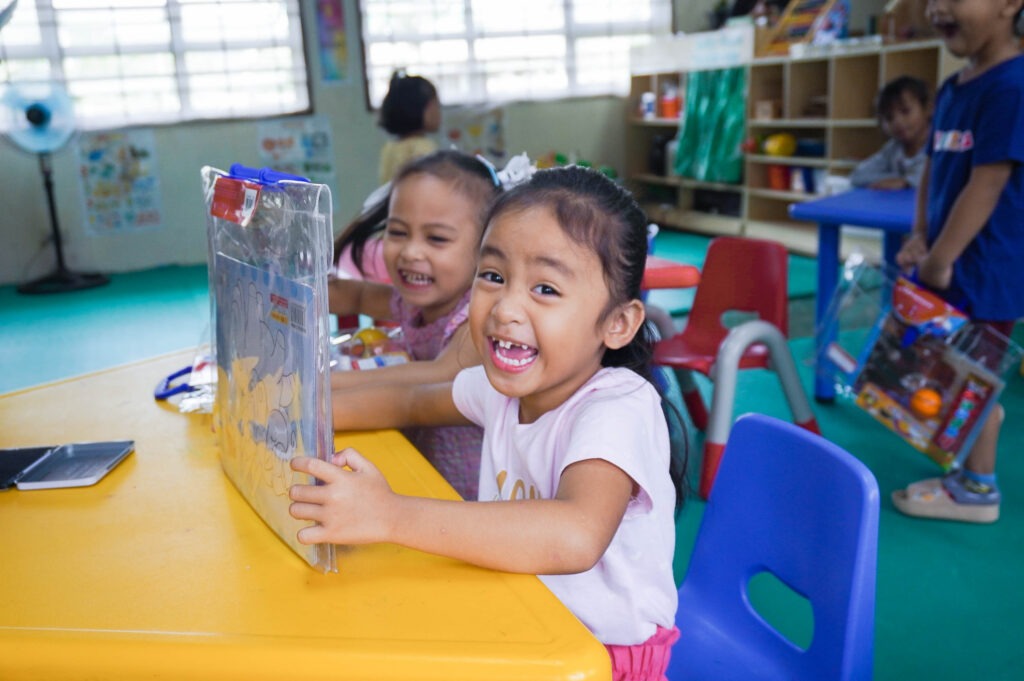
This experience served as a reminder to Lalen about the importance of sustained emotional support for children, especially during emergencies. As a frontline worker within her community, she recognizes the need to ensure that children are given attention, guidance, and safe spaces to process difficult experiences.
“Hinahangad ko po na sana lahat po ng mga bata talagang mabigyan po sila ng pansin… masuportahan po sila, makausap po sila, matulungan po sila,” she added.
(I sincerely hope that all children will be given the attention they deserve, that they will be supported, listened to, and helped.)
She emphasizes that while the experience of the typhoon may not be completely erased from children’s memories, its emotional impact can be lessened through proper support.
Through the partnership with UNICEF Philippines and the commitment of stakeholders and volunteers, PFA sessions were conducted across Viga, Panganiban, Bagamanoc, and Caramoran, reaching 2,000 children and strengthening the capacity of local duty bearers to respond to children’s psychosocial needs during emergencies.
In communities affected by disaster, recovery is not limited to infrastructure and material assistance. It also involves ensuring that children are supported, listened to, and guided as they regain a sense of safety and stability.